
Country has sufficient gasoline stock: Iqbal Hassan
Power, Energy and Mineral Resources Minister Iqbal Hassan Mahmood today said the country has sufficient ...



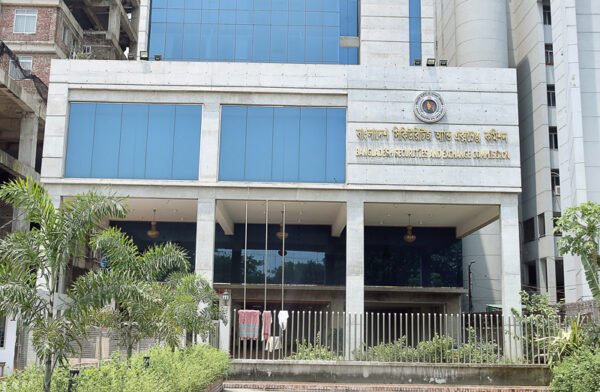
Merchant banks are important stakeholders in the country’s capital market. They play a major role in listing new companies, managing investors’ portfolios, and structuring capital for large industrial enterprises. Due to the ongoing market stagnation, narrowing income streams, and the burden of negative equity, many institutions are now facing an existential crisis. Those concerned say market stability must be ensured very soon; otherwise, there will be an adverse impact on the entire economy, including the capital market and related institutions.
Role of Merchant Banks in the Capital Market
Merchant banks are one of the most important stakeholders in the capital market, working as financial institutions that connect companies and investors. They keep the market active by bringing new companies to the market, assisting in capital raising, and providing investment advice. Merchant banks work on both the demand and supply sides. On the demand side, they work for companies — such as conducting IPO management, preparing prospectuses, underwriting, corporate advisory, and assisting in fund raising through private placement.
On the supply side, they work for investors. Their activities include investment management (portfolio management), market research, investment risk analysis, and providing investment advice. In addition, merchant banks conduct legal, financial, and operational due diligence before investing in any company.
Current Reality
It is often said that merchant banks act as liquidity providers in the capital market by bringing new IPOs. However, under the current market situation, instead of supplying liquidity, these institutions themselves have fallen into crisis. As new IPOs are not coming, their main sources of income — issue management and underwriting — have completely stopped. On the other hand, due to the overall market situation and the reduced participation of investors, sufficient income is not coming from portfolio management either.
A top executive of a merchant bank, who did not wish to be named, said that in this situation, merchant banks are mainly surviving on dividends from their investments and income from managing some portfolios. Another top executive said that he is trying to survive by adopting cost-cutting policies through staff reduction.
Closed New Issues, Blocked Main Income Source
After the political change last year, there was also a change in the country’s capital market regulatory body. Market participants expected that along with stopping previous irregularities, the new leadership would bring good governance and dynamism to the market. But in reality, the opposite happened. For almost one and a half years, no new IPO has come to the market. This has created frustration among market participants. Especially, issue management is one of the core activities of merchant banks. As a result, the closure of the IPO process has pushed these institutions into an existential crisis.
Meanwhile, in neighboring India, the Securities and Exchange Board of India (SEBI) approved 34 IPOs in the 2024–25 fiscal year. According to the Association of Investment Bankers of India (AIBI), the country’s market regulator SEBI approved 34 IPOs worth a total of 41,462 crore rupees, while another 55 draft red herring prospectuses are under consideration, with a possible value of around 98,672 crore rupees. The organization says this reflects both trust in the regulatory body and the growing interest of companies to enter the capital market.
At the same time, according to the organization, retail investors’ interest in the country is also at a high level, which has been further accelerated by strong digital onboarding, increased financial literacy, and good profits from recent IPOs. In neighboring Pakistan, seven IPOs were approved in 2024. These companies raised 8.4 billion rupees from the country’s capital market. But in Bangladesh, no IPO has come in the last one year. Its negative impact has been felt among the stakeholders of the market.
Those involved with merchant banks say that everyone is in a bad situation due to the sluggish market, but those related to this sector are in the worst condition. Because the main sources of income for merchant banks are issue management and underwriting.
High in Number, Low in Quality
Compared to the size of the country’s economy and capital market, the number of related stakeholders is high. Currently, there are 456 stock brokerage firms, 66 merchant banks, and 67 asset management companies in the country. This number is higher than in other countries except India. On one hand, in terms of contribution and size, Bangladesh’s capital market lags behind other countries, while on the other hand, the number of market-related institutions is higher than in those countries. There are concerns about the capability of the regulatory body to monitor all these institutions.
On the other hand, questions also remain about the quality and service standards of merchant banks. Institutions providing portfolio management services are supposed to have research teams. In many countries, these institutions have separate research departments. However, in Bangladesh, only a small number of merchant banks have independent research divisions. According to sources, only about eight to ten institutions, which follow corporate governance properly, have separate research teams.
Existence of Negative Equity and Shortage of Skilled Manpower
Another serious problem in Bangladesh’s capital market is negative equity, which market participants describe as a cancer. Since the sudden crash of 2010, merchant banks and related institutions have been suffering from this problem.
As of October 31, 2024, the total negative equity of various brokerage houses and merchant banks, excluding provisioning, stood at Tk 7,824.18 crore. Such a huge amount of accumulated negative equity cannot be eliminated easily. Therefore, these institutions will have to carry this burden for several more years. In addition, there is also a shortage of skilled manpower in this sector. Many institutions have reduced staff to cut costs, and due to the unstable situation, skilled professionals are reluctant to join this sector. As a result, stakeholders fear a severe shortage of skilled manpower in the future.
Abul Ahsan Ahmed, Chief Operating Officer of IDLC Investments Limited, said, “Our capital market is not stable, and this sector has been in a bad condition for a long time. As a result, public confidence in the capital market has decreased, and those who work in this sector do not feel secure. When they get better opportunities elsewhere, they move. Therefore, retaining skilled manpower has become challenging. The shortage of skilled manpower in this sector may become severe in the future,” he expressed concern.
Statement from the Sector Representative
When asked about the current challenges and overall condition of the merchant banking sector, Bangladesh Merchant Bankers Association (BMBA) General Secretary and Managing Director and CEO of Sandhani Life Finance Limited, Muhammad Nazrul Islam, said, “The supply in the market is now closed. There have been no IPOs for about one and a half years. Since there is no IPO, we are not getting the issue management fee. Again, without IPOs, there is no underwriting.”
Stating that business activities increase when liquidity flow improves, he said, “The market was a bit better around July. We had a lot of hope that maybe the volume would improve. If the volume increased, liquidity flow would also rise. But since then, the market has continuously been in a down mode.”
Expressing hope that a better environment will come after the election, he said, “The supply chain must be fixed; IPOs have to be brought in anyway. There will be good IPOs and bad IPOs. We have to try to maintain compliance through proper filtering. When you have a headache, you can’t just cut off the head.”
At one time, the merchant banking sector worked as the driving force of investment in the country’s capital market. But due to the lack of new issues, negative equity, and overall stagnation, they are now struggling to survive. Therefore, stakeholders have demanded to increase supply in the market and ensure transparency, policy consistency, and good governance for the overall improvement of the capital market and this sector.







পাঠকের মতামত